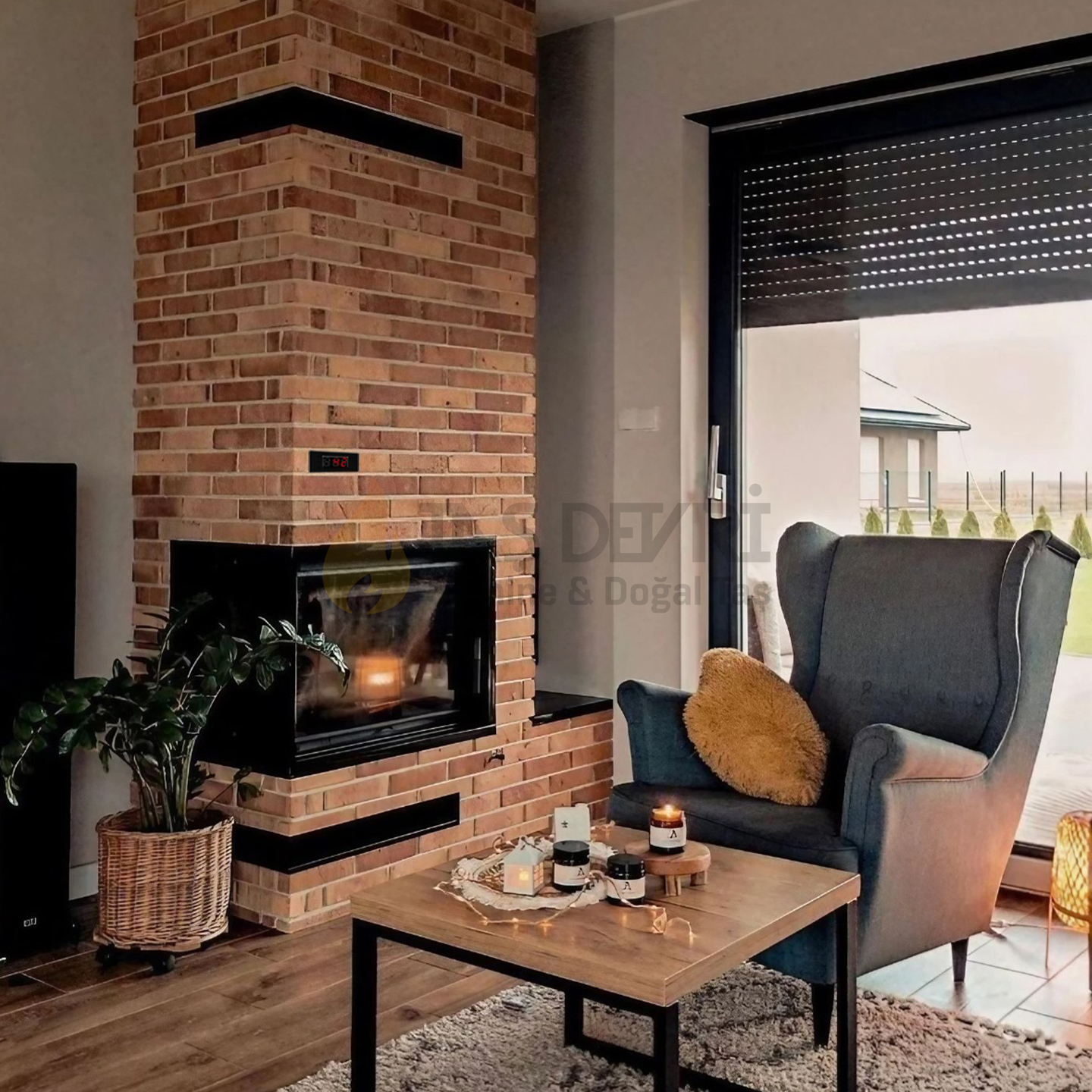
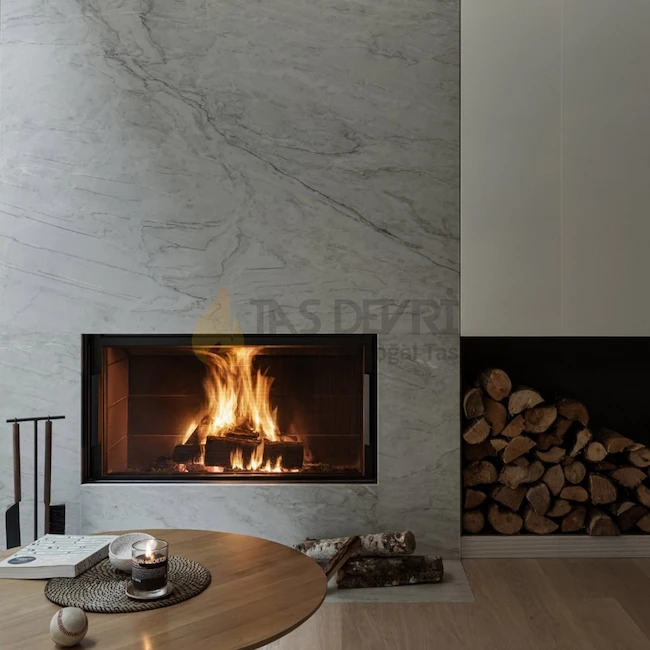
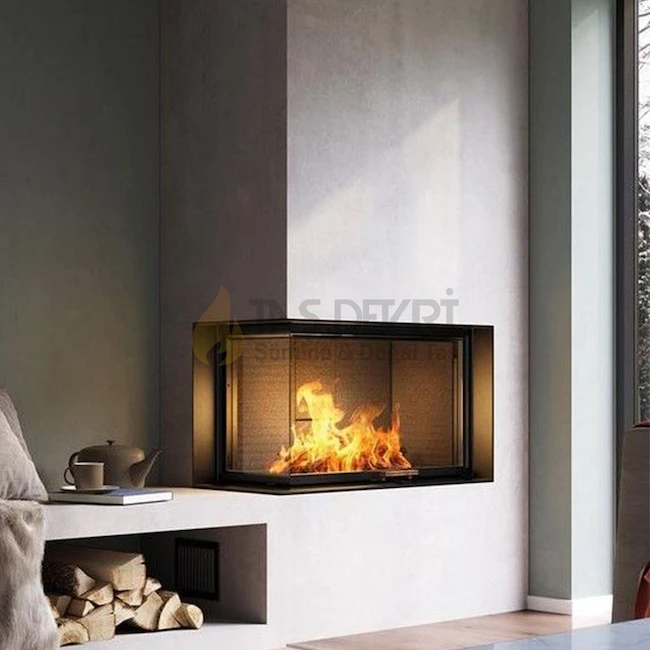
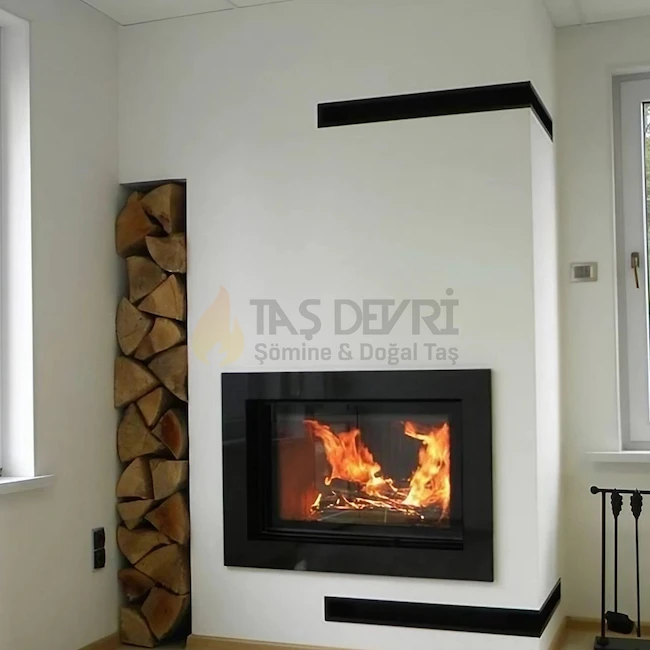
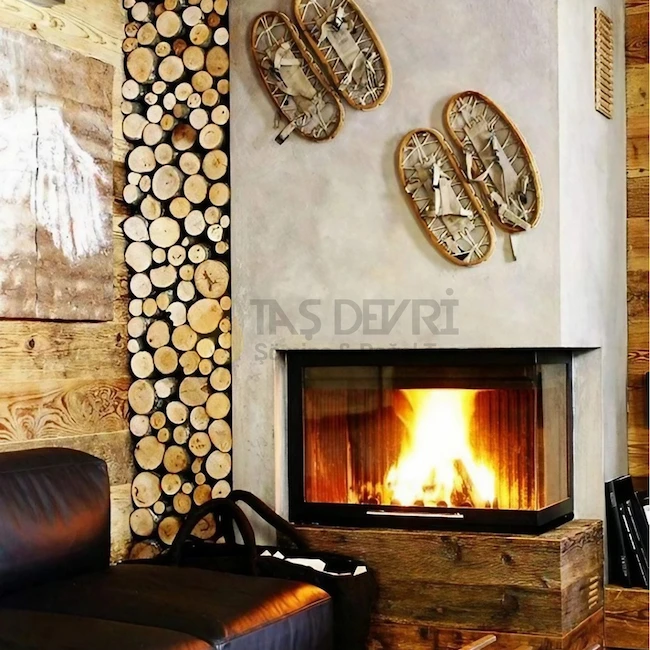
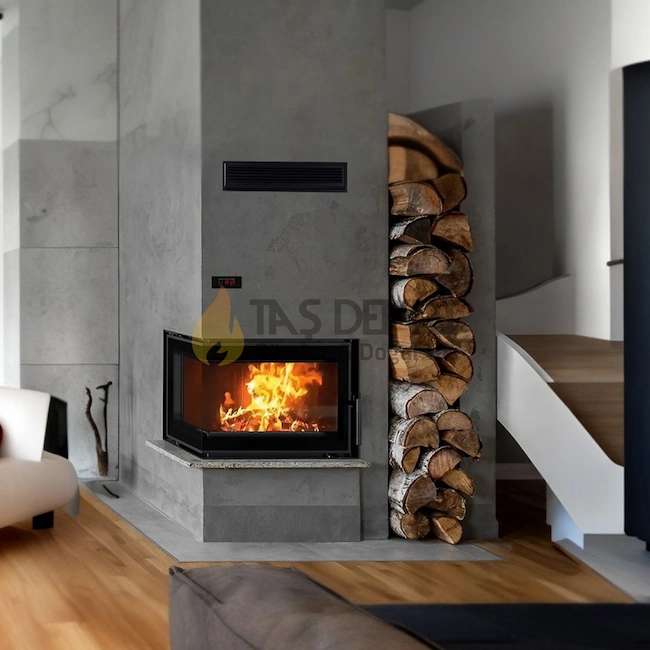
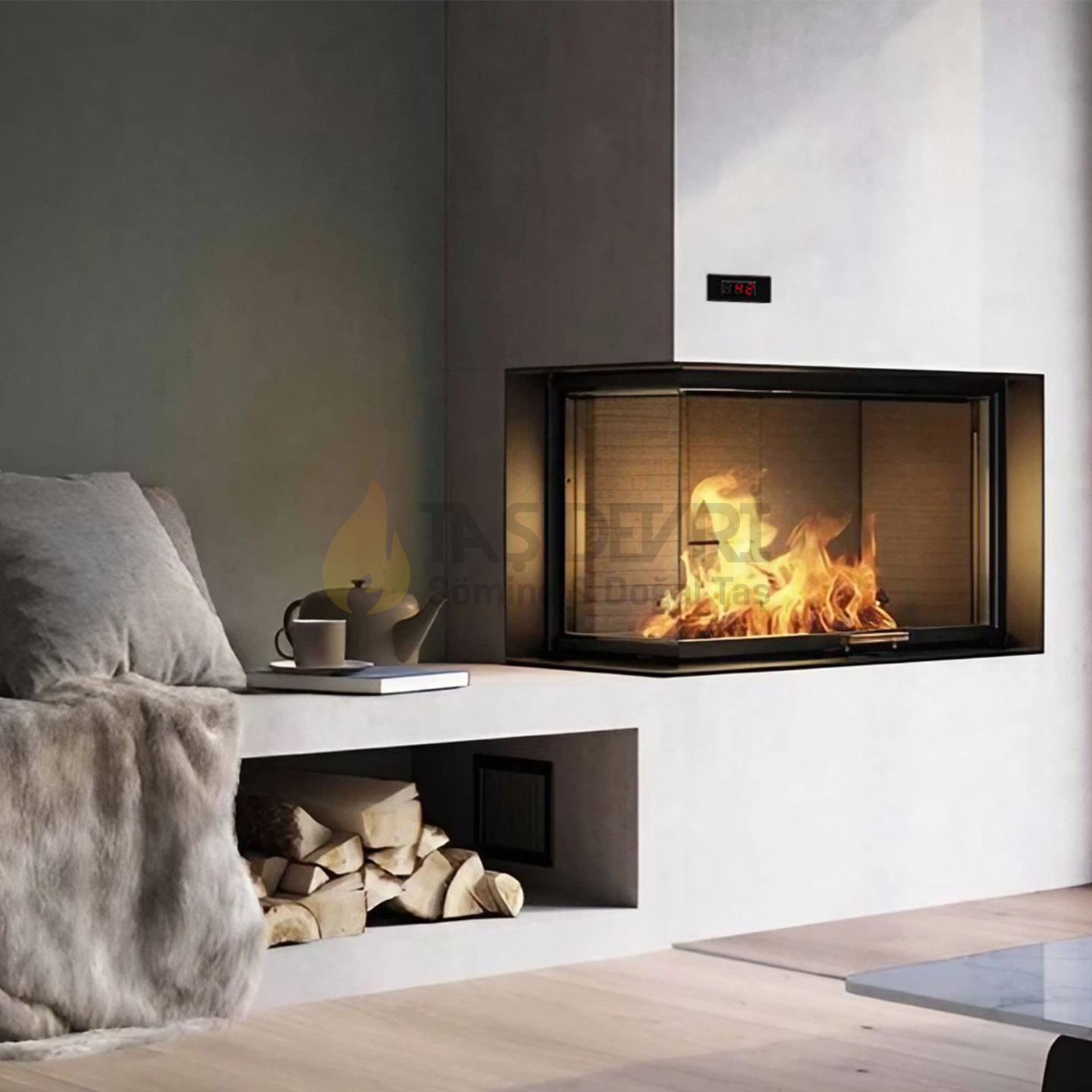
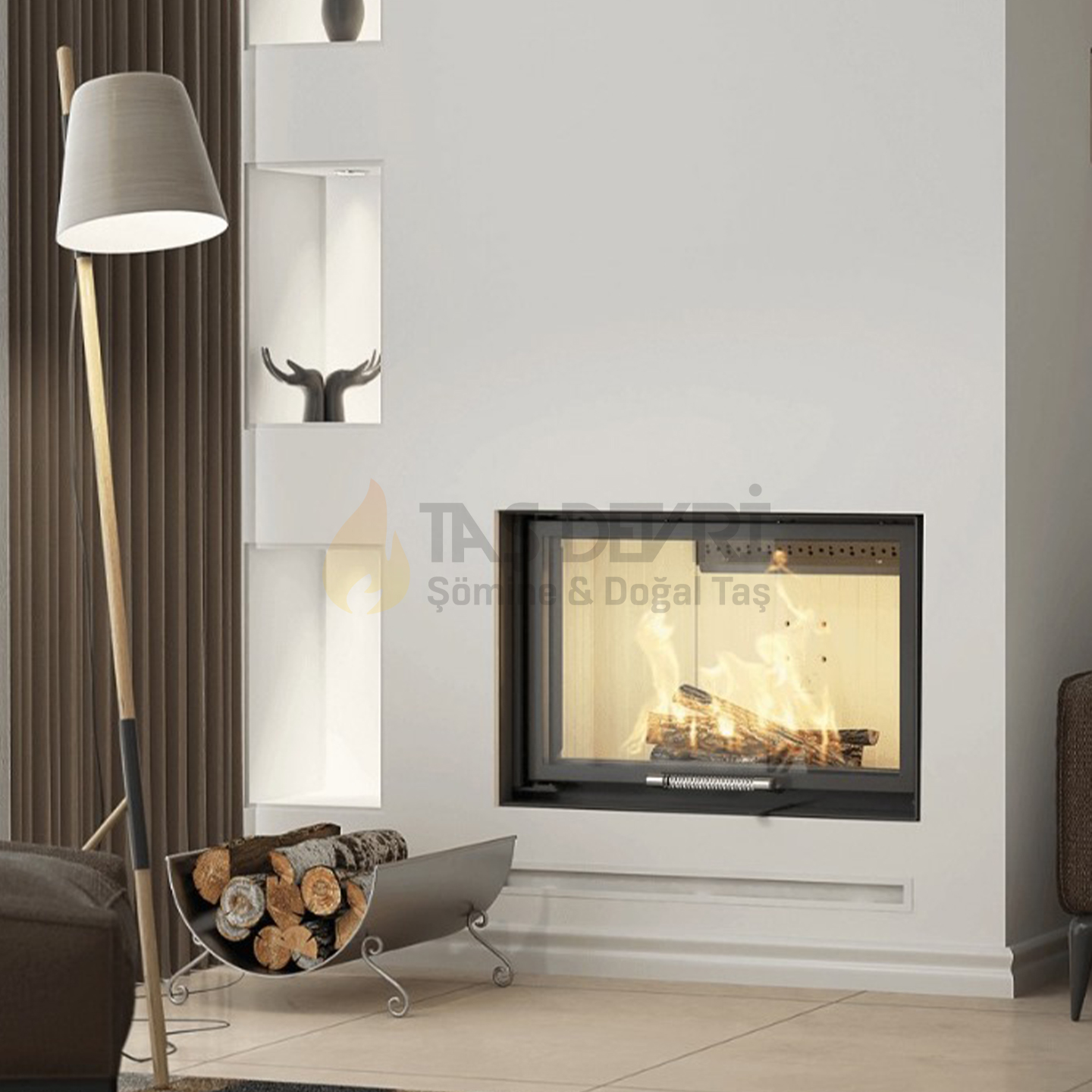
A water-jacket fireplace heats the whole house, not just the room it sits in. A water jacket inside the firebox sends heated water into the system and the radiators come on.
In large detached homes and mountain lodges it markedly reduces heating costs.
How the system is installed
The water jacket inside the firebox is connected to the heating system through a circulation pump and expansion vessel. Your existing boiler stays in place: while the fireplace is burning the boiler stays off, and when it dies down the boiler takes over. Heating is therefore never interrupted.
Who is it for?
- Detached and rural homes with easy access to firewood
- Properties in areas without a mains gas supply
- Large homes with high heating costs
- Mountain lodge and bungalow projects
Safety requirements
An overheat safety valve, expansion vessel and thermal discharge line are mandatory on water-jacket systems. We do not install without them. The pipework connection is always planned together with a qualified heating engineer.
Frequently Asked Questions
Will it work alongside my existing boiler?
Yes. Installed correctly the two complement each other: while the fireplace burns the boiler waits, and when the fire dies the boiler takes over, so the house never gets cold.
How many radiators can it feed?
That depends on the water-side kW rating. A 20 kW water-jacket firebox can feed 12–15 radiator sections in a well-insulated home. The exact figure is calculated during the survey.
What happens in a power cut?
The circulation pump stops, so the system must be able to move heat by natural convection. For that reason the pipework is designed to shed heat even without power, together with a thermal safety valve.